Case studyReal-time fantasy football
FanClash: real-time fantasy football, bringing the excitement of live sport to mobile
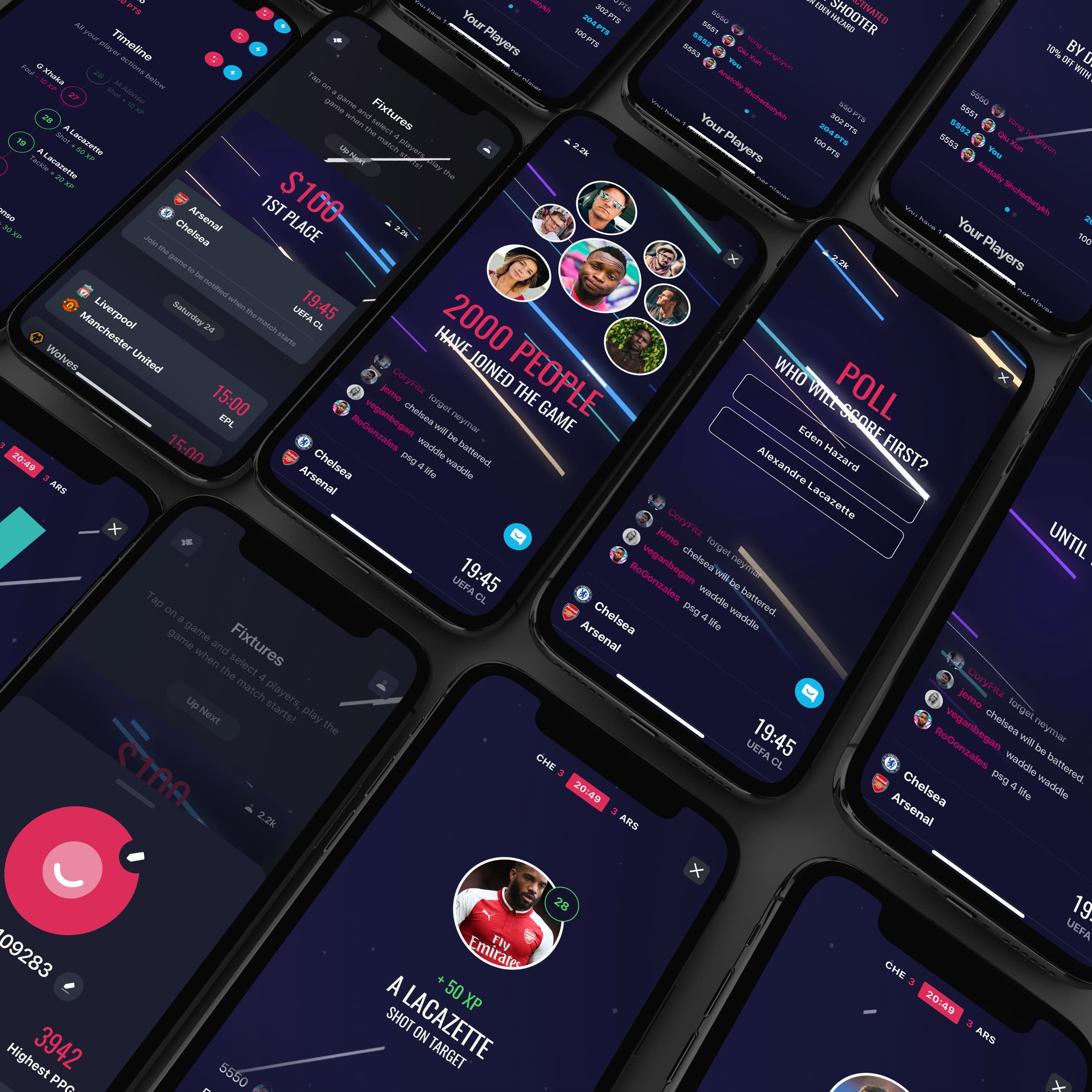
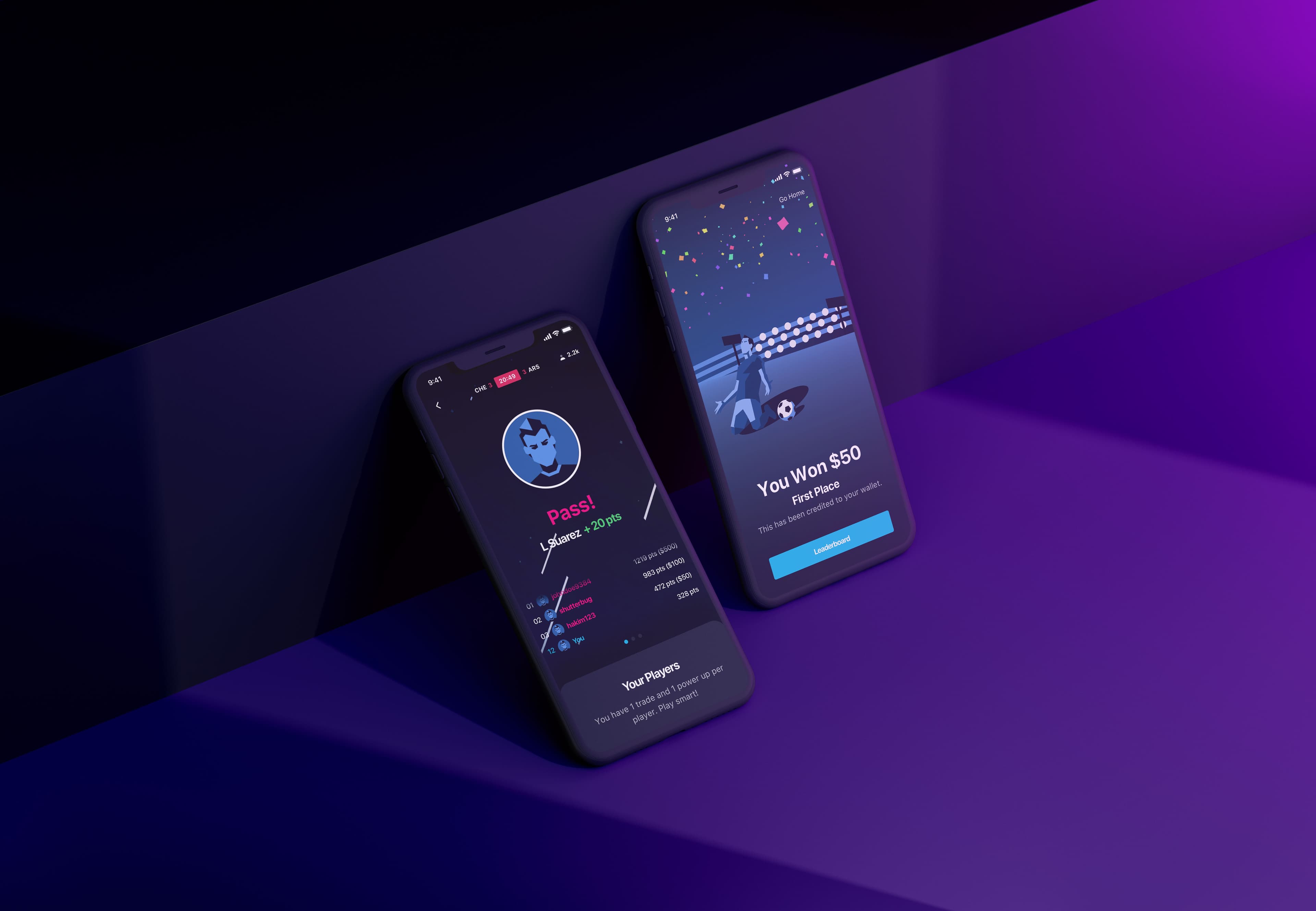
FanClash is a real-time fantasy football game where an unlimited number of players compete against each other for cash prizes. Users pick 4 players before a match and score points from their actions on the pitch as the game unfolds. I designed the app, and we built and deployed it within 4 months using Flutter. The company was later acquired by GameOn Entertainment Technologies.
- Role
- Product Designer
- Timeline
- 4 months to launch
- Platform
- iOS & Android (Flutter)
- Outcome
- Acquired by GameOn, 2022
01Research
User research
After gathering business requirements and running a stakeholder workshop, we surveyed existing customers and people using competing products to understand how they would use ours. Our upfront research combined qualitative surveys with card-sorting sessions.
Q01
How often do you currently play fantasy football, and what frustrates you most about existing platforms?
Q02
When playing fantasy football, do you prefer season-long leagues or daily/weekly contests? Why?
Q03
What's the maximum time you're willing to spend selecting your team before a match?
Q04
Have you ever missed out on fantasy football because team selection was too complex or time-consuming?
Q05
How important is real-time scoring to you whilst watching the actual match?
Q06
What would make you choose one fantasy football app over another?
Q07
How do you feel about playing against unlimited opponents versus small private leagues?
Q08
What information do you need when selecting players for your fantasy team?
Q09
How quickly do you expect to receive your winnings after a match ends?
Q10
Would you prefer a simplified game with just 4 players to select rather than a full 11-player team?
02Journeys
User journeys
Much of the game was based on a previous game by the same company, Ultimate Fan Live. I simplified its user experience: picking 4 players rather than a full 11-player team, and cutting screens and steps from contest entry compared with the earlier product. Research showed that users typically didn't sit through a match on their devices; they picked their phones up for a few short minutes during a match to check in and use power-ups. So I centred the experience on simple actions that can be carried out within a few seconds.
03Structure
Information architecture
The developers and I both needed a fresh, high-level understanding of which components would make up each screen.
Because of the strict time limits, we decided to work concurrently: the information architecture helped the developers plan the app's backend while I designed.
For me, it was a chance to cut the fat from the previous application and establish the bare minimum each screen required.
04Foundations
Previous work for Ultimate Fan Live
Much of FanClash built on my learnings from a similar product I launched with the company previously, Ultimate Fan Live, which amassed 1.6M+ downloads between 2014 and 2016, and 14M gameplays. Here is a brief snippet of users reacting as they play the game.
05Craft
Design
I designed the UI in Sketch, using Abstract for version control and stakeholder feedback. Anima's Launchpad kept constraints and stacks intact in my Sketch designs, letting me make fast, flexible changes on the fly without breaking the layout.
Interaction design
Motion, built to ship
I created the animations, including the dynamic text, in After Effects and exported them as both videos and animated SVGs through Lottie.
06Delivery
Rapid development process
Working in an agile environment, we delivered a fully functional app from concept to launch in 4 months. Building cross-platform in Flutter let us iterate quickly and ship the same product to iOS and Android.
Sprint-based development
Two-week sprints with continuous testing and iteration
User testing
Regular beta testing with football fans for feedback
Performance optimisation
Ensuring smooth real-time updates even with thousands of concurrent users